Karachi
0346 4111188

Laser Pain Treatment » Laser Therapy vs Physiotherapy: Which Should You Choose?
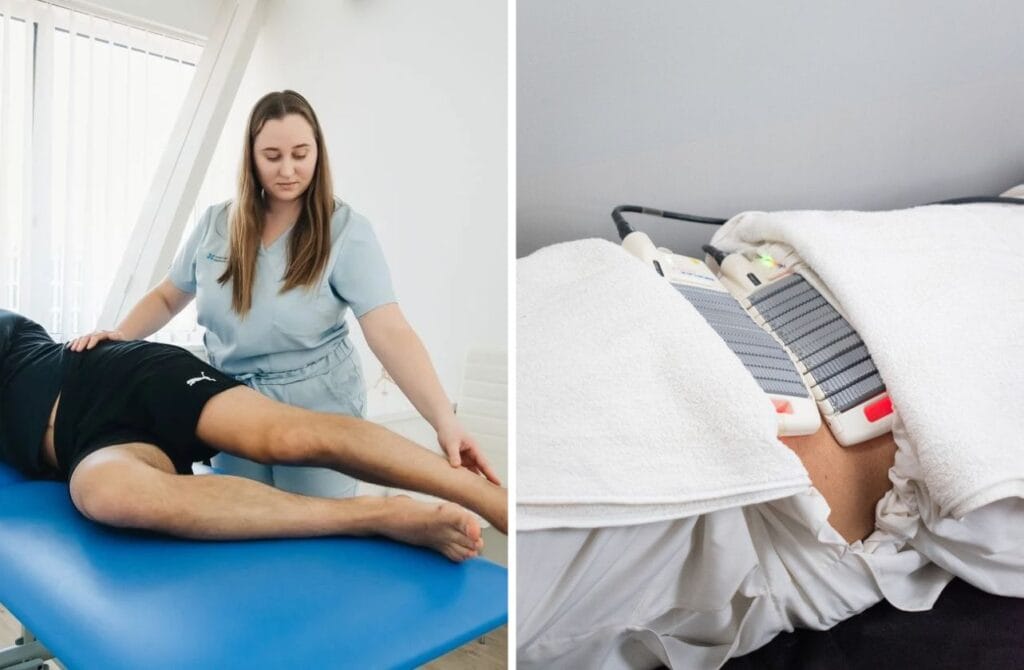
Laser therapy and physiotherapy aren’t really rival treatments competing for the same job. Physiotherapy is a broad discipline covering manual therapy, exercise, and rehabilitation, delivered by a trained physiotherapist. Laser therapy, specifically low-level laser therapy (LLLT), is a single non-invasive tool that uses light to reduce pain and inflammation and support tissue healing. In practice, laser therapy is most often used as part of a physiotherapy plan, not as a stand-alone substitute for it.
That said, if you’re weighing which to try first, or wondering whether laser therapy alone could work for you, here’s an honest look at what the research says.
Physiotherapy typically involves a hands-on assessment, manual techniques, and a structured exercise program tailored to your condition. It addresses strength, mobility, and movement patterns, things a passive treatment can’t fix on its own.
Laser therapy delivers light energy to the affected tissue, which may help reduce inflammation, support blood flow, and encourage the body’s own healing processes. It’s passive from the patient’s side, you don’t need to do anything during a session, but it doesn’t retrain movement or build strength the way physiotherapy exercises do.
Most of the strongest studies comparing laser directly against conventional physiotherapy involve high-intensity laser therapy (HILT), a more powerful laser class than the low-level laser therapy (LLLT) technology used at BioFlex Pakistan. This distinction matters, because the two aren’t interchangeable in the research.
For HILT specifically: a 2019 randomized controlled trial by Nazari, Moezy, Nejati, and Mazaherinezhad, published in Lasers in Medical Science, compared high-intensity laser therapy, conventional physiotherapy (ultrasound, TENS, and exercise), and exercise alone in patients with knee osteoarthritis, 12 sessions each. HILT came out significantly ahead of conventional physiotherapy on pain (VAS) and function (WOMAC) scores, though the two were similar on a couple of other measures like walking speed, and both outperformed exercise alone.
For LLLT specifically, the picture is different. Research more consistently shows LLLT works best as an addition to exercise or physiotherapy, not as a stand-alone replacement. One randomized controlled trial on knee osteoarthritis found that a combined exercise-plus-LLLT group had better outcomes than either LLLT alone or exercise alone.
The honest takeaway: if you’re looking at a head-to-head “laser beats physiotherapy” result, check which type of laser the study actually used. What holds up well for LLLT, the technology used at BioFlex Pakistan, is that it adds value alongside physiotherapy and exercise, rather than replacing the need for them outright.
There’s no universal rule here, but a few honest starting points. If your main issue is pain and inflammation with a specific, localized source, a strained muscle, or a flare-up of joint pain, laser therapy alone might be a reasonable first step, particularly if you want something low-effort while the acute pain settles. If your issue involves weakness, poor movement patterns, or reduced range of motion, physiotherapy’s exercise and manual components are doing something laser therapy can’t do on its own. And if you have a chronic condition like osteoarthritis, the research leans toward combining the two rather than picking one.
None of this replaces an actual assessment. A physiotherapist or laser therapy provider can look at your specific condition and tell you which starting point makes more sense, or whether combining both from the start is the better call.
Yes, and for many conditions this is exactly how the two are meant to work together. Laser therapy can be used as one part of a broader physiotherapy plan rather than an alternative to it. If you’re already seeing a physiotherapist, it’s worth asking whether laser therapy could be added to your existing plan rather than treating it as a separate decision.
BioFlex Pakistan uses low-level laser therapy as part of its treatment plans for musculoskeletal pain conditions, at clinics in Islamabad, Karachi, and Peshawar. Rather than treating laser therapy and physiotherapy-style rehabilitation as competing choices, a proper assessment can determine whether laser therapy on its own fits your condition, or whether it should be paired with an exercise and rehabilitation plan.
It depends on what “better” means for your situation, and which type of laser is being compared. They’re generally not meant to replace each other; laser therapy is most often used as one part of a physiotherapy plan.
Yes, laser therapy can be used on its own for certain conditions, particularly pain and inflammation from a specific, localized issue. Whether that’s the right call for you depends on your specific condition.
This depends on your insurance provider. Check directly with them for coverage details on both.
A proper assessment is the only reliable way to know. A physiotherapist or laser therapy provider can look at your specific condition and recommend whether laser therapy alone, physiotherapy alone, or a combination makes the most sense.
BioFlex Pakistan’s treatment is based on low-level laser therapy. Depending on your condition, this may be recommended alongside an exercise or rehabilitation plan.
Share
Book Your Appointment
WhatsApp us